Blog

Successional Sowing

SUCCESSIONAL SOWING

Successional sowing

It is easy to freeze are vegetable’s if we have a glut of crops. Fresh vegetable’s however that have been picked a few hours earlier & cooked always taste so much better. So to avoid growing a glut over the growing season we need to have smaller quantities ripening over a period. Say we are going to use a cabbage each week , take a modular seed tray & plant three seeds, label them with the variety & date. While they are developing pot on into three inch pots. Then three weeks later sow another three seeds as your first set of seeds are developing. Continue the process, that way you wont have too many of the same crop all ready at the same time.

This method can be applied to any crop that you have started in pots.

Blog By Mark Burton (Allotment Secretary)

Pest Problems & Protection – Carrot Root Fly

The carrot fly not only affects carrots but parsnips and even celery as well. The fly’s maggots cause the damage, killing seedlings and burrowing under the skin of mature plants, leaving brown tunnels behind. The fly’s produce two generations in a year and are active in April/May & July/August which almost ensures they can get at our crops. You can try sowing outside of these time frames in February,March,June,September, and October but its not an absolute guarantee that your crop will not suffer from carrot fly.

The fly is attracted by the smell of carrots & is most active during the day, so thinning, which bruises foliage and releases the scent, is best carried out later in the day. Inter-planting with stronger smelling onions is suppose to confuse the fly but evidence is mixed. Growing your carrots high in containers like half barrels in the ground could keep your crops out of reach. The best barrier to protect from carrot fly is to grow them under fleece, especially in the danger months. There are no chemicals available to amateur gardeners, but there are now more carrot fly resistant seeds being sold like ” Systan Flyaway” & “Resistafly” which could be your best option.

Blog & research by Mark Burton (Allotment Secretary) – Pictures Mick Cooper

Potatoe fertilizer – Give your seed potatoes a boost

Give your potatoe plants a boost with granular fertilizer. This can be applied to the soil and either watered in, or using a hoe to leach down towards the plant root zones. For bumper crops and healthy potatoes.

We sell potatoe fertilizer at our stores shop priced at £1.60 per KG. All money taken goes back in to the running of the site.

Blog created by Mark Burton (Allotment Secretary)

Pests & Problems – Cabbage White Fly

The cabbage whitefly is a sap – feeding insect that can infest cabbage & other types of brassica plants. They are white winged insects that fly up in clouds when brassica leaves are disturbed. Cabbage whitefly can be very difficult to control, very much so on allotments where there are likely to be affected plants on neighbouring plots that will be a source of re-infestation. You will often see whitefly in mid Summer when the weather is warm. Due to whitefly feeding, plants will become weak, leaves will eventually wilt, turn pale or yellow & this in effect will stunt plant growth.

The best way to get rid of the dreaded whitefly is to blast them with your watering can, this will cause them to scatter,   If you are not wanting to use bug sprays or pesticides a simple remedy is to use washing up liquid and water,  a good squirt of liquid to a gallon of water should be enough. Using a sprayer only use in cooler temperatures early in the morning or later in the day.

It is nearly impossible to get rid of whitefly but using this method or bug sprays will allow you to keep on top of the problem.


Blog & Research by Mark Burton (Allotment Secretary)

New bay areas near completion

The work has nearly been completed on the new bay areas which will provide storage for site wheel barrows, scrap metal only, and eventually cow manure which will be sold per barrow to our members.

Big thanks to Mick Hogan (Trustee) who managed the building work, devoting many hours to the project. All the committee played there part in helping Mick. It has made a big difference in keeping the area tidy and organised. Can we all make sure scrap metal only is put in the right hand bay not plastic or rubbish. If anyone is found dumping rubbish or other materials in the bays there tenancy will be terminated. When we emptied the origional scrap metal bin the amount of plastic and rubbish that had been placed in there was really disheartening.

Blog created by Mark Burton (Allotment Secretary)

Vegetable Growing – April

Things should really get going on the allotment in April, the days will start to lengthen & temperatures start to rise.  Do keep an eye on the weather forecasts as a cold snap or snow are not unheard of in April & the occasional frost is to be expected.  The first rule is never trust the weather.

There is plenty to sow & plant outside especially if the month of March was not suitable.Onion sets & shallots can be planted now, remember shallots need a long time in the ground. Aim to get your seed potatoes planted by the end of the month, you can start to sow carrots & peas outside. Remember though the peas are a good snack for mice, so keep them covered. Radish can now be sown outside & keep sowing every three to four weeks for a continuous supply over the summer.  Beetroot can be sown directly outside,but may need covering if the soil is too wet, also leeks & Turnip.

Aubergines, chillies , tomatoes can now be sown in the greenhouse as they all need a long growing season. You can also sow cucumber seeds in the greenhouse for planting outside later. Sweetcorn also needs a long growing season, it would be ideal to start them in modules under cover.  Courgettes, pumpkins & other squashes can be started in the greenhouse, also kale, marrows, climbing beans & dwarf French beans under cover. Start sowing also celery indoors, aubergines, & Summer cabbages & other variety’s from the brassica family.

Lettuce,rocket & salad leaves can also be sown outside along with root vegetables all dependent on the weather of course.

Blog created by Mark Burton (Allotment Secretary)

LCC – Power To Inspect Allotments

LCC Power To Inspect Allotments

Dear Members,

Leeds City Council authorised officers are entitled to inspect allotment sites whether they are administered by Leeds City Council, or leased to a self administered association like our site.  Over the growing season authorised officers can inspect allotment sites to see if members are,  cultivating to a satisfactory standard & are utilising the land for growing purposes.  As the new growing season is about to start soon we wanted plot holders to be aware of this information, & adhere to the site rules.

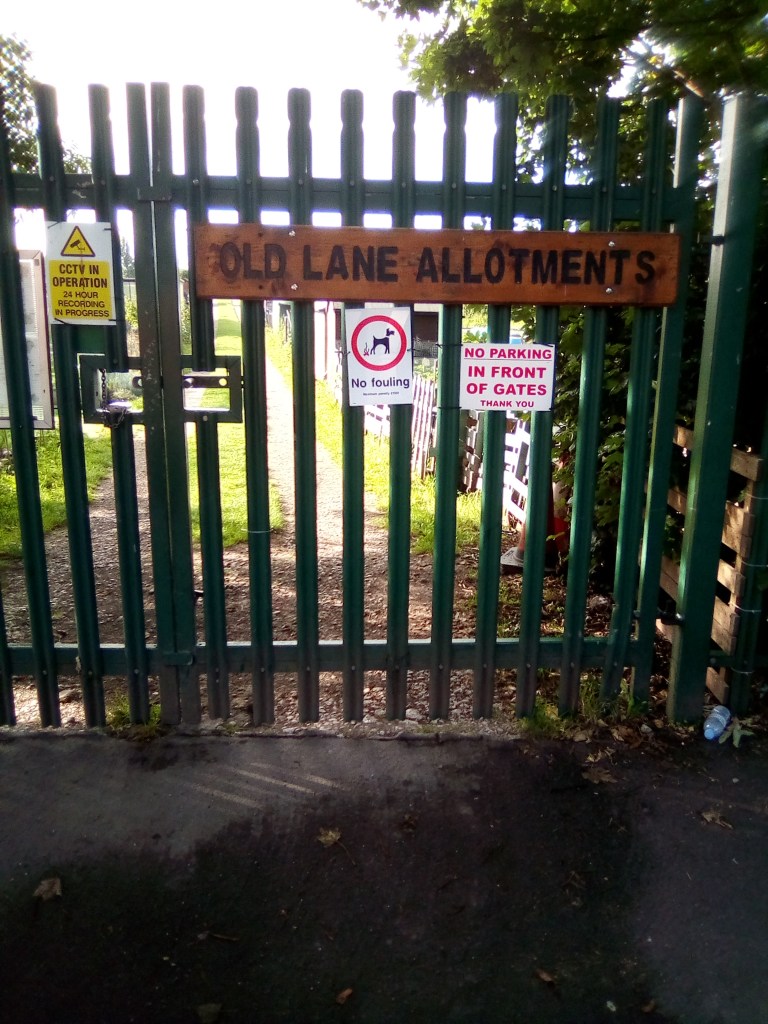
Old Lane Allotments Association

SEED POTATOES – PART 2 How To Plant & Harvest.

Planting potatoes

Plant your chitted potatoes when the soil starts to warm up, usually in mid- March to early April. Start by digging a trench 7.5 – 13cm (3-5 inch) deep, add a sprinkling of fertiliser to your trench before you begin planting. Plant early potatoes about 30cm (12 inch) apart with 40-50cm (16-20 inch) between the rows, second earlies & maincrops about 38cm (15 inch) apart with 75cm (30 inch) between the rows. Handle your chitted seed potatoes (tubers) with care, gently setting them in to the trench with the shoots pointing upwards, be really careful not to break the shoots. Cover the potatoes lightly with soil & fill in the trench. As soon as the shoots appear, earth up each plant by covering it with a ridge of soil so the shoots are just buried. You need to do this at regular intervals creating a small mound around the plant to prevent any sun damage or element damage.

Harvesting

Your home grown potatoes should be ready for lifting from June until September, depending on the varieties & the growing conditions. Earlies can be lifted & eaten as soon as they are ready, this will be when above -ground growth is still green,& usually as soon as the flowers open on the plant. Second & maincrop varieties can be kept in the ground much longer, until late September, even though above-ground growth may well be looking past its best. Two weeks before you lift the crop, cut the growth off the plants at ground level. This should give the skins of the potatoes sufficient time to toughen up, making them far less prone to damage from lifting and easier to store.

Blog written by Mark Burton (Allotment Secretary)

Cauliflower

The cauliflower probably originated in countries bordering the Mediterranean sea. Today cauliflowers are a major commercial crop in the United Kingdom. The cauliflower is named as a “super food” cauliflower eaten raw is an excellent source of vitamin C, K, B6, potassium, folate, & fibre. It is very high in protein, thiamine, & magnesium.

Cauliflowers do best in deeply dug, fertile soil It is important to keep the soil moist at all stages of the plants development. The seedlings are best transplanting to their cropping position to keep growth disruption to a minimum. Dig in plenty of manure in the Autumn.

Always remember to red the seed packet for growing instructions

Blog & research by Mark Burton (Allotment Secretary)