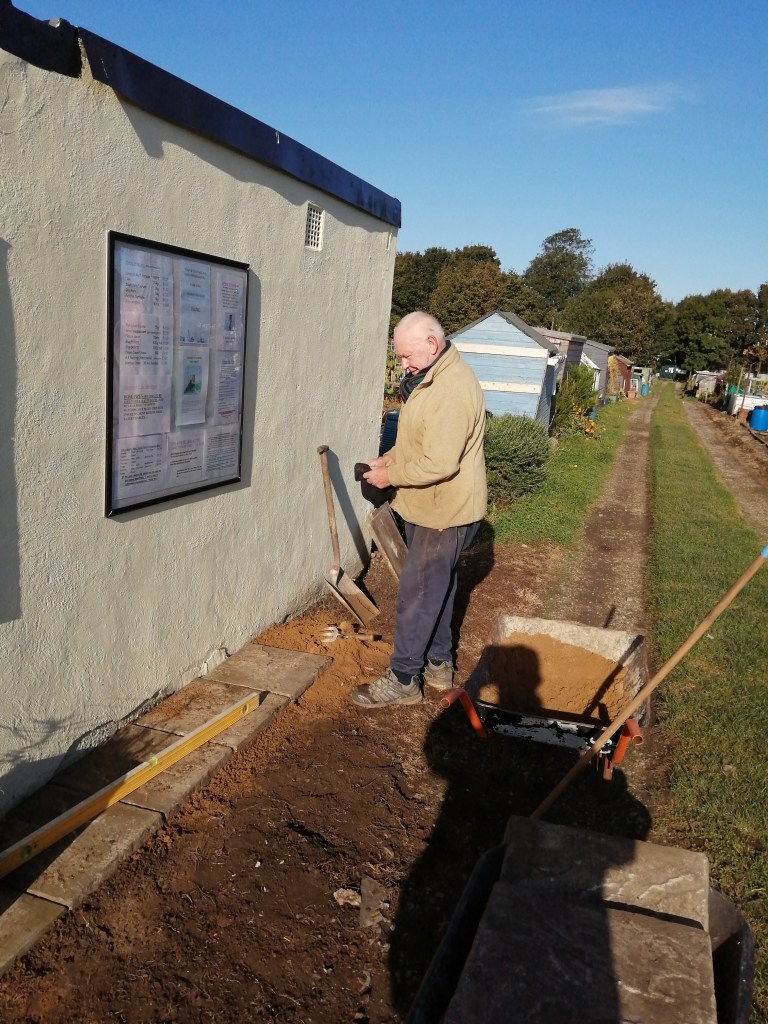
No Annual General Meeting this October due to the ongoing pandemic.

Once again due to the ongoing pandemic there will be no Annual General Meeting which was scheduled for the 4th October 2021. Ways to pay for annual rents, seed potatoes & Kings seed orders will be explained when we distribute rent statements at the end of August/beginning of September .

Blog by Mark Burton (Allotment Secretary)

Life of a hen – part 4

My hens Molly, Lilly , Onyx, Peppa, & Dotty have really settled in they are now eating greens, & i Have eggs already. They must be happy & settled to be laying. They are lovely natured animals all with there own characteristics & personalities. I am reading & learning about hens everyday to gain more knowledge.

Blog & pictures by Mark Burton (Allotment Secretary)

Life of a hen

This was the first day for my 5 hens Molly, Lilly, Onyx, Dotty, & Pepa, I had to name them all as they have all got there own personalities. They didn’t come out of the house for the first day obviously cautious of there new surroundings.

Blog & Pictures by (Mark Burton – Allotment Secretary)

30 Litre plant pots

We have a small number of 30 litre second hand plant pots for sale at £1 each.

See Mark Burton (Allotment Secretary if you would like to purchase any. All funds go back into the running of the site. Big thankyou from our chairman Mick Hogan for supplying them

Blog created by Mark Burton (Allotment Secretary) picture Mark Burton

Vegetable Growing – August

August with a bit of luck, brings us the best of the summer weather but being the traditional holiday month,  it can be hard keeping on top of your allotment with a fortnights holiday. Early potatoes should be dug up now, its best to harvest potatoes early in the day rinse them & leave them to dry,  in the sunlight for a day to harden the skins before storage.

Vegetables you can still sow in August

Spring cabbage, Spring onions, radish, beetroot, turnips, Spinach, Swiss chard, carrots, Kale for Winter & Spring cropping, parsley, coriander & chervil can be sown in the greenhouse for growing throughout winter. Plant out summer  Cauliflowers early this month for an Autumn harvest

Stop tomato plants growing now to encourage fruit to swell, keep side shoots in check, you want tomato’s & don’t want a mass of green foliage.   Keep an eye on your brassicas for butterfly eggs & caterpillars. Most of these will be under the leaves in clusters of little yellow/white balls. Pick or wash them off before they develop & dine on your dinner. Turn your compost the warm weather will help break it down, water it if it’s really dry.

Blog by Mark Burton (Allotment Secretary)
 

Wheelbarrows

All the site wheelbarrow handles have been painted orange for identification.

Please can we make sure the barrows are put back in the holding area

Thank you

Blog created by Mark Burton (Allotment Secretary)

The Life of a hen

An oppurtunity came along where i acquired a hen run it had to be dismantled on site & rebuilt. Tony Paine took the lead on the dismantle & rebuild of the hen coup & as you can see he has done a really grand job. We had to make the hen run fox proof & safe for the hens to dwell in.

I am going to do a series of blogs now I’ve got my hens. I thought it might be nice to show everyone how they are settling in to there new environment. We worked for 3 !/2 days to make it to what it looks like in the picture. Thanks to Tony & everyone involved in transporting the roof & hen house on to my plot.

Blog & picture by Mark Burton (Allotment Secretary)

Slug & Snail Prevention

By far the worst pests to the vegetable grower is the slug & the snail, it doesn’t matter what you grow or where you grow it the slug is waiting to devour the crop before you do. They are not fussy eaters but they do prefer young seedlings. Below are some remedies for slug & snail prevention.

  1. A container half buried in the ground and half filled with beer. The slug is lured by the scent & tumbles to its death .
  2. Self adhesive copper tape around pots & planters deters the slug & snail & gives them a small electric shock when attempting to cross it.
  3. Eggs shells is an old favorite. to put around your vulnerable plants.
  4. Grit & gravel – the finely crushed horticultural grit makes a good barrier as it has sharp edges.
  5. Nut shells – the sharp edges make good barriers- around vulnerable plants.
  6. You can also trap them under grapefruit or orange skins the slug likes to hide away from predatory birds in the day time.
  7. Slug/snail pellets have had a bad press the theory being that the poisoned slugs will be eaten by birds, frogs, & other helpful creatures who feed upon slugs/snails & poison them in turn. The other concern is they might be eaten directly by pets. The pellets if used should be scattered thinly over an area not just dumped in piles. Piling them up is counter productive as they contain an attractant & so the slug will find each pellet. The pellets contain a repellent to discourage animals from eating them & the blue color repels birds as well.


Blog by Mark Burton (Allotment Secretary)