These pictures were taken today on my plot, the fox having a lazy day on the allotments.
Photographs by Mark Burton (Allotment Secretary)
You don’t need a compost bin to make compost, you can simply make a compost heap. A compost bin makes your garden or allotment a lot tidier. Plastic compost bins are useful making good use of space. Ideally a compost bin sits on soil in a sunny position, as placing one in the shade takes the compost longer to form.
Hot Composting – You construct the compost heap carefully with the right materials in even layers. You wait for it to heat up, then start to cool down , then you have to turn it to mix up the layers. And then do it all again, finally you can relax then let it mature for several weeks before use.
Cold Composting – Most people don’t have time to make a hot compost or they don’t have the right mix of materials. You can take a more relaxed approach with cold composting. You throw things in as & when you have them & let it decompose in its own time.
Things To Compost – Compost breaks down because bacteria, fungi & mini beasts eat organic matter. They need a balanced diet of browns & greens (equal amounts by volume) . Browns – Carbon Rich Materials – Twigs, dead leaves, cardboard, newspaper, straw, hay, wood shavings. Greens – Full Of Nitrogen – Fresh leaves & stems, grass cuttings, vegetable peelings, Apple cores, tea leaves, coffee grounds, faeces from vegetarian animals. You can also add egg shells for calcium but crush them up first as they are slow to break down.
Blog By Mark Burton (Allotment Secretary)

South Leeds Conservative Club
Wooler Street, Leeds, LS11 7JH
CROP SPACING
Different vegetable’s have individual spacing requirements which sometimes determine their final size. More often vegetable’s are grown in rows with a recommended spacing between plants, and between the rows. They may alternatively be grown in equidistant (equal distances) spacing between the plants – the average of the recommended spacing between plats & rows : so plants 15cm (6inch) apart, may alternatively , in rows 30cm (12 inch) apart, alternatively be grown 23cm (9 Inch) apart each way. This method probably gives the best results so plants have an equal share of light, air, moisture, & soil nutrients
As they mature they form a canopy over the soil which suppresses weeds.
Blog created by Mark Burton (Allotment Secretary)
The Better Action For Families team that occupy plot 5 on our site run by Lynn Bailey entered produce grown on their allotment at the Middleton park show. They received the certificates below . Well done to everyone involved. Thanks Lynn for the pics.
Blog created by Mark Burton (Allotment Secretary)
Sweet peppers & Chilli peppers have probably been eaten since 7500BC & thought to have originated from Mexico, although that is not known for sure. Nowadays about 90% of all cultivated forms of chillies are of Mexican origin. The Jalapeno chilli takes its name from Jalapa , the state capital of Veracruz. Sweet peppers are also known as bell peppers, they are sweet because unlike chillies they have minimal capsaicin which is what gives chillies their ‘heat’. The Charapita chilli pepper roughly grows to the size of a pea, however a kilogramme of these would cost you around 19 thousand pounds. It is said to be the most expensive chilli in the world.
Chillies especially red ones are high in vitamin C and also rich in vitamin B , they are very high in potassium & magnesium. Sweet peppers are also high in vitamin C, and have high levels of vitamins B6, A, E, plus natural occurring folic acid. Keep them inside when growing & feed them with seaweed food when they start to flower.
Always read the seed packet for growing instructions
Blog by Mark Burton (Allotment Secretary)

Today the runner bean is one of our best loved & widely grown vegetables. It is known as an oriental climber in most countries. Its other popular names are scarlet bean, & Dutch case knife bean. It has been grown for over 2,000 years originating in the tropical uplands of Central America. Runner beans grow best in a warm spot which also encourages pollinating insects. Do not grow them in the same position every year , as this is likely to build up of root rotting diseases.
They enjoy a rich drained soil, & a sheltered sunny position. Beans will wrap round your canes anticlockwise & when they reach the top of your cane supports, its a good idea to cut the plant off at the top to encourage the plant to bush out then you will get more beans. Water plants liberally & frequently especially during dry spells. Tie young plants loosely to the canes & protect them from slugs, they will quickly climb naturally & will need no other support.
Blog & Research By Mark Burton (Allotment Secretary)
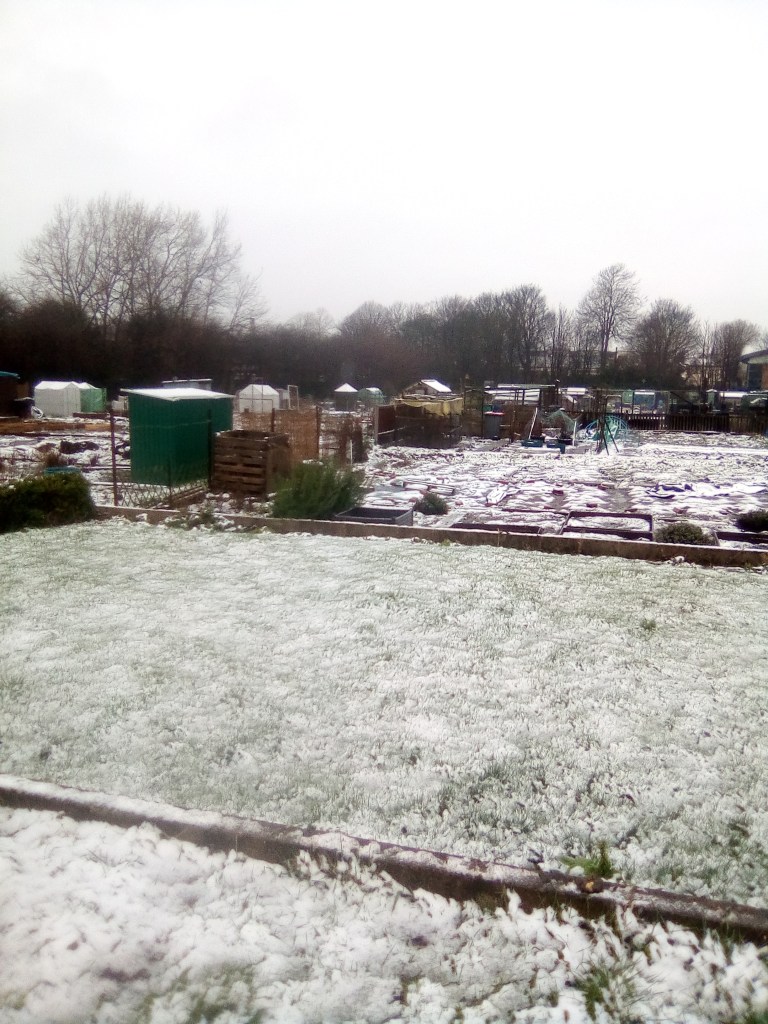
Whatever the weather brings in September the season definitely begins to wind down. The bulk of the harvest starts to come home now & gaps start to appear on your allotment plot. You can still sow winter hardy spring onions, & also plant Japanese winter onion sets for harvesting from June next year. This is the last chance to sow spinach & winter lettuce, a few last minute radishes may give you a final crop until the end of the year. Now is the time to plant new strawberry plants, either those you have bought or propagated from runners. You can also transplant Spring cabbages for harvesting next year. You still need to keep those weeds down with the hoe before they get established. Tomatoes, peppers, cucumbers, will need continuous feeding, & should be ready for picking.
The second early potatoes should have been lifted by now, if all the stalks have died off then there is no food been supplied to the tubers, so they wont grow anymore. Your main crop carrots should be ready for pulling some time this month. Sweet corn should also be ready to make sure it is remove some outer leaves & put your finger nail into the kernel if its milky they are ready. Pumpkins should also be ready cut the stalks a few centimeters from the fruit & leave in the sun to continuing hardening off.
Blog By Mark Burton (Site Secretary)
During the growing season plants absorb important nutrients & minerals from the soil, these need to be replaced if your plot is to maintain a high level of productivity. Most general purpose fertilisers have an N:P:K rating which relates to the three main elements needed for healthy plant growth. The higher the rating the more of that element exists within the fertiliser.
Nitrogen ( N )
Supports the growth of vegetable parts of plants, leaves & stems. Leafy vegetable’s such as spinach, cabbage, lettuce, have a high nitrogen requirement. Lack of nitrogen causes poor, stunted growth with spindly stems with yellow & discoloured leaves. Nitrogen washes out of the soil so feeds need to be applied over the growing season.
Phosphorus ( P )
Stimulates seed germination & root development, increases stem strength & improves flower formation. Root vegetable’s need plenty of phosphorus to aid development. Lack of phosphorus causes poor, stunted growth, plants produce little or no flowers with a weak root system.
Potassium ( K )
Essential for flower & fruit development, also improves drought pest & disease resistance. Often referred to a “quality element” because of the importance to many of the features associated with quality, such as shape, size colour, & taste. Potatoes, fruit, & tomatoes need a high yield of potassium to crop well. Plants low in potassium are stunted in growth & provide lower yields. Excessive levels of potassium can lead to magnesium & calcium deficiencies. Minerals & also trace elements are important for good plant health, over time with each & every harvest, the soil is depleted of these vital ingredients & they also need replacing.
Blog & Research By Mark Burton (Allotment Secretary)
Please click/double click/ on the link above to read our (PDF version) Newsletter for September 2019. Enjoy reading.
Newsletter editor/content Steve Johnston – Content Mark Burton
friendly, locally-managed allotments in Beeston, Leeds
A place to return to education, and meet your personal and professional goals in a supportive learning environment. Choose from short courses to PhDs at https://warwick.ac.uk/study/cll/
Welcome to my world: digging, harvesting and other stuff