All the site wheelbarrow handles have been painted orange for identification.
Please can we make sure the barrows are put back in the holding area
Thank you
Blog created by Mark Burton (Allotment Secretary)
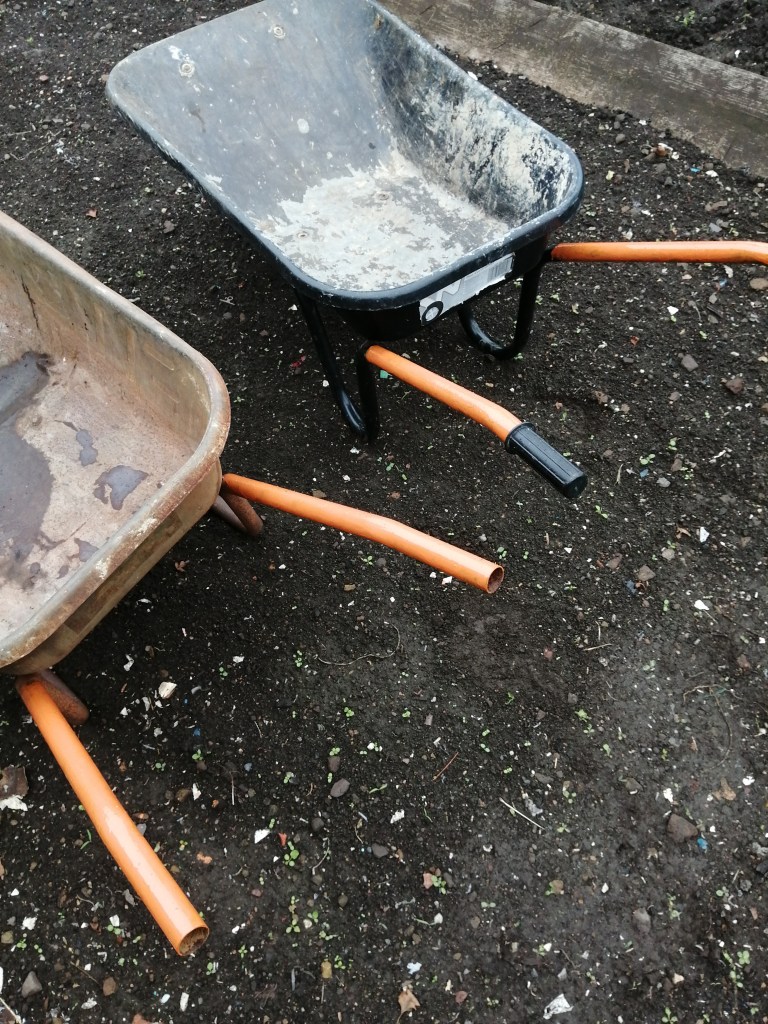
All the site wheelbarrow handles have been painted orange for identification.
Please can we make sure the barrows are put back in the holding area
Thank you
Blog created by Mark Burton (Allotment Secretary)
The Life of a hen
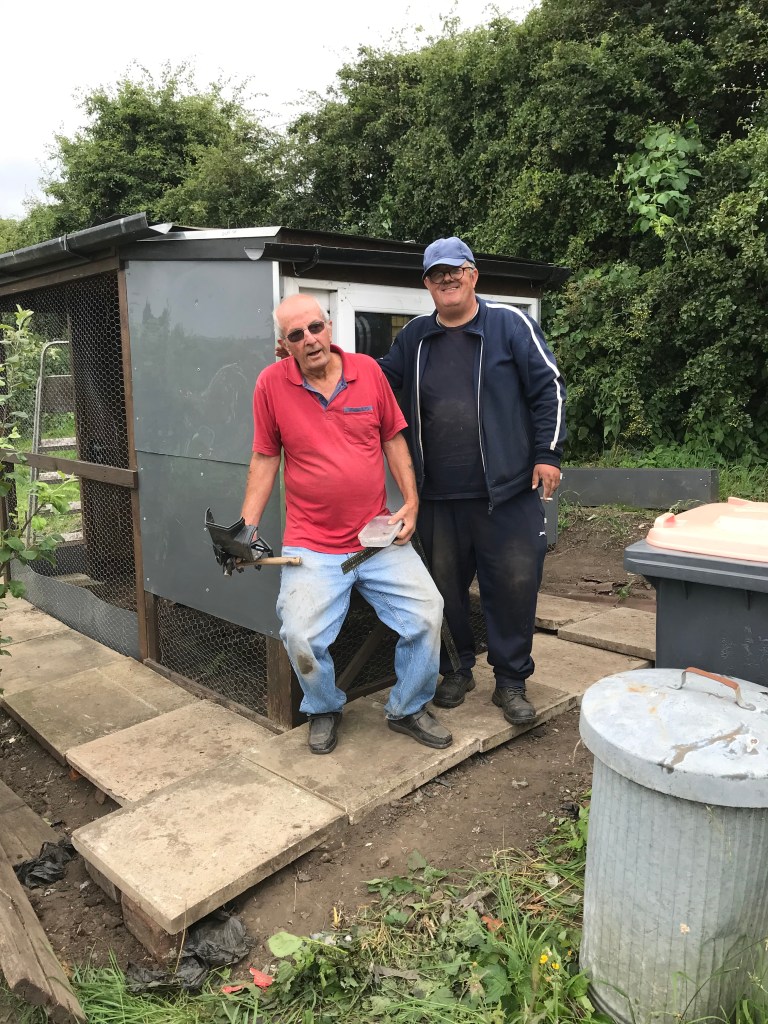
An oppurtunity came along where i acquired a hen run it had to be dismantled on site & rebuilt. Tony Paine took the lead on the dismantle & rebuild of the hen coup & as you can see he has done a really grand job. We had to make the hen run fox proof & safe for the hens to dwell in.
I am going to do a series of blogs now I’ve got my hens. I thought it might be nice to show everyone how they are settling in to there new environment. We worked for 3 !/2 days to make it to what it looks like in the picture. Thanks to Tony & everyone involved in transporting the roof & hen house on to my plot.
Blog & picture by Mark Burton (Allotment Secretary)


By far the worst pests to the vegetable grower is the slug & the snail, it doesn’t matter what you grow or where you grow it the slug is waiting to devour the crop before you do. They are not fussy eaters but they do prefer young seedlings. Below are some remedies for slug & snail prevention.
Blog by Mark Burton (Allotment Secretary)


The Development Of The Allotment – Part 2


The Development Of The Allotment


July is one of the driest months so a lot of time may be spent watering your plot. Although the hectic sowing of the first part of the year is past, there are still things to sow, plant, and happily harvest. Those early potatoes should be coming out of the ground by the end of this month, and although they do not store as long as main crop varieties they will store before you finish eating them.
Leeks – Finish transplanting or “dibbing in” leeks raised in pots, modules, or temporary seed beds. They should be in their final position this month. If you have too many to transplant cut them up & put them in a stir fry instead of spring onions.
Peas & French Beans – This is your last chance for sowing or planting out peas & beans. any later the pods are unlikely to develop in time.
Root Vegetables – Sow your last batch of beetroot now. Late carrot & turnip varieties can still go in at the end of this month.
Other crops you can still sow – Radish, spring onion, Kale, Chinese cabbage, Lettuce, Spring cabbage, last chance to plant out any Brussels sprouts, winter cabbage, autumn cauliflowers you have been growing from seed.
Don’t forget to keep your onions weed free, summer thinning can be now done on apple, pear, plum trees etc. Keep the hoe in your hand & keep on top of those weeds.
Blog By Mark Burton (Allotment Secretary)
These are some of the pictures that were taken when the committee painted the hut office.
I think you will all agree it looks transformed as the centre piece for the site. Thanks to everyone who was involved.


Blog created by Mark Burton (Allotment Secretary) Pictures taken by Steve Johnston
Anyone interested in this shed please contact Hazel Spindley on plot 41E. I believe the shed is situated locally & it would involve some one dismantling the shed to move it on to site. Not sure of actual dimensions unfortunately.

Blog by Mark Burton (Allotment Secretary)


You don’t need a compost bin to make compost, you can simply make a compost heap. A compost bin makes your garden or allotment a lot tidier. Plastic compost bins are useful making good use of space. Ideally a compost bin sits on soil in a sunny position, as placing one in the shade takes the compost longer to form.
Hot Composting – You construct the compost heap carefully with the right materials in even layers. You wait for it to heat up, then start to cool down , then you have to turn it to mix up the layers. And then do it all again, finally you can relax then let it mature for several weeks before use.
Cold Composting – Most people don’t have time to make a hot compost or they don’t have the right mix of materials. You can take a more relaxed approach with cold composting. You throw things in as & when you have them & let it decompose in its own time.
Things To Compost – Compost breaks down because bacteria, fungi & mini beasts eat organic matter. They need a balanced diet of browns & greens (equal amounts by volume) . Browns – Carbon Rich Materials – Twigs, dead leaves, cardboard, newspaper, straw, hay, wood shavings. Greens – Full Of Nitrogen – Fresh leaves & stems, grass cuttings, vegetable peelings, Apple cores, tea leaves, coffee grounds, faeces from vegetarian animals. You can also add egg shells for calcium but crush them up first as they are slow to break down.
Blog By Mark Burton (Allotment Secretary)

CONTACT DETAILS
DEAR PLOT MEMBERS
If anyone changes their address, mobile telephone numbers,
or E mail details, please can you let the Secretary (Mark Burton) know as soon as possible. It is imperative that are records are correct for the site working alongside Leeds City Council.
OLD LANE ALLOTMENTS ASSOCIATION
friendly, locally-managed allotments in Beeston, Leeds
A place to return to education, and meet your personal and professional goals in a supportive learning environment. Choose from short courses to PhDs at https://warwick.ac.uk/study/cll/
Welcome to my world: digging, harvesting and other stuff
