If anyone changes their address, mobile telephone numbers,
or E mail details, please can you let the Secretary (Mark Burton) know as soon as possible. It is imperative that are records are correct for the site working alongside Leeds City Council.
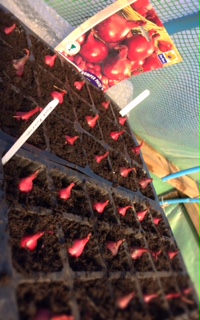
My good friend Mick Cooper sent me these two pictures which I will explain. The seed potato on the left hand side has been left in a dark environment this showing that the growth is light in colour & also looks weak, and will continue to grow spindly.
The seed potato on the right hand side has been placed in a light frost free environment showing that the growth is dark & healthy.
You should have your seed potatoes chitting at the moment, check on them and see how there looking.
Blog created by Mark Burton (Allotment Secretary) / Content Mick Cooper Plot 12E
Hosepipes can only be used to fill up water barrels that you have on your plot. That strictly means hosepipes cant be used to direct water plants or land, it is forbidden on site. Anyone caught using a hosepipe other than filling up a water barrel will be in a strict breach of there tenancy agreement .
Thank You
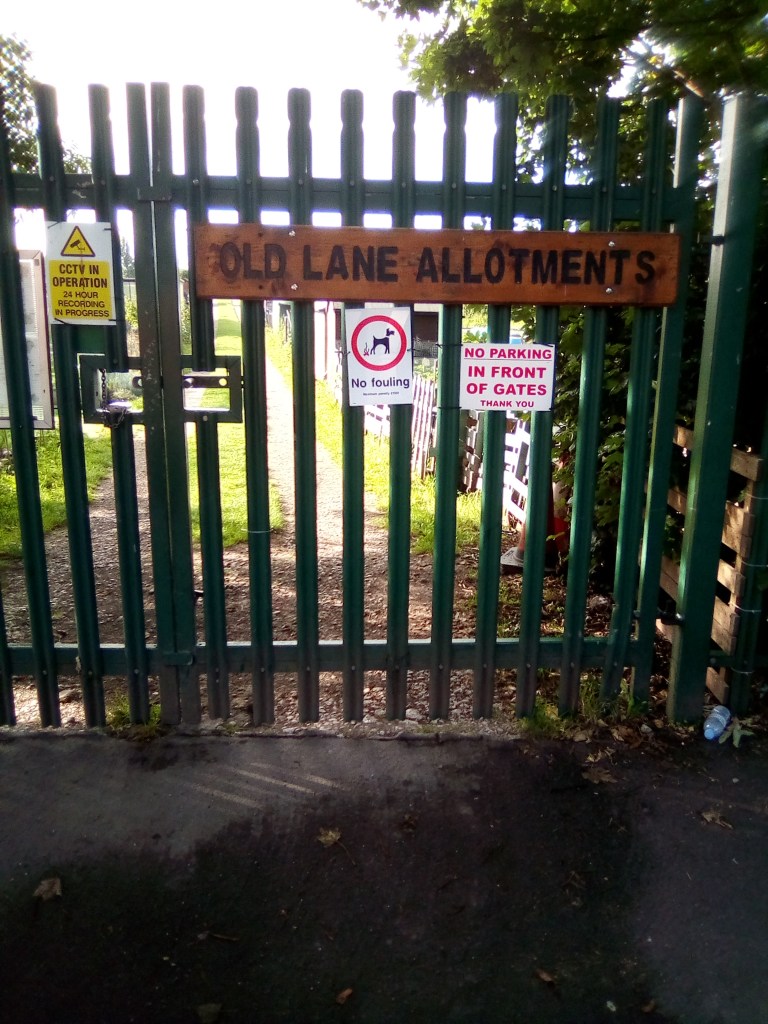
Old Lane Allotments Association. (Blog created by Mark Burton – Site Secretary)
We have 2 x sets of garden shears with extendable handles for trimming the grass round the sides of your plot. We will loan them out to plot members on request all you need to do is ask a member of the committee. Pathways between plots are the responsibility of plot holders & part of allotment gardening, it is also written in our constitution of rules as part of plot maintenance.
Blog Created by Mark Burton (Allotment Secretary) For & On behalf of Old Lane Allotments Association
We want to give members an oppurtunity to be involved with the running of the site. We have 7 committee officers at present who all work hard on a voluntary basis. We keep the site managed, & maintained to what we think is a very good standard. All are members work hard on their plots & the passion for allotment gardening is there for all to see. Our site is full going into the new growing season, with just over eighty members who occupy plots. We would welcome fresh input & ideas to continue improving the site. Anyone who has any questions about helping on the committee or wants a chat with one of the committee officers feel free to approach them when they are on site. Or E mail : oldlanelotts@gmail.com with any questions or queries.
There are dozens of different seed potato varieties you can buy, usually described as early, second early, & maincrop potatoes. These names indicate when they crop and also give you an idea of the space you will need to plant them. You should concentrate on the earlier types if your short of space, its worth mentioning that earlies are less likely to encounter pest problems as you can lift them much earlier in the year.
First earlies should be ready 10 weeks after planting, second earlies take 16 to 17 weeks to mature after planting, so you should be able to harvest them from very late June through to the start of August. Maincrop seed potatoes will be ready 18 to 20 weeks after planting, so they can be lifted from late August through to October. These varieties tend to be the best for storage.
CHITTING
Chitting simply means encouraging the seed potatoes to sprout before planting, you should start chitting in late February, about 6 weeks before you intend planting your potatoes. Each seed potato has a number of eyes, stand the tubers (seed potatoes) in trays or old egg boxes, with plenty of natural light. The seed potatoes are ready to be planted out when the eye shoots are 1.5 – 2.5 centimetres long.
During the growing season plants absorb important nutrients & minerals from the soil, these need to be replaced if your plot is to maintain a high level of productivity. Most general purpose fertilisers have an N:P:K rating which relates to the three main elements needed for healthy plant growth. The higher the rating the more of that element exists within the fertiliser.
Nitrogen ( N )
Supports the growth of vegetable parts of plants, leaves & stems. Leafy vegetable’s such as spinach, cabbage, lettuce, have a high nitrogen requirement. Lack of nitrogen causes poor, stunted growth with spindly stems with yellow & discoloured leaves. Nitrogen washes out of the soil so feeds need to be applied over the growing season.
Phosphorus ( P )
Stimulates seed germination & root development, increases stem strength & improves flower formation. Root vegetable’s need plenty of phosphorus to aid development. Lack of phosphorus causes poor, stunted growth, plants produce little or no flowers with a weak root system.
Potassium ( K )
Essential for flower & fruit development, also improves drought pest & disease resistance. Often referred to a “quality element” because of the importance to many of the features associated with quality, such as shape, size colour, & taste. Potatoes, fruit, & tomatoes need a high yield of potassium to crop well. Plants low in potassium are stunted in growth & provide lower yields. Excessive levels of potassium can lead to magnesium & calcium deficiencies. Minerals & also trace elements are important for good plant health, over time with each & every harvest, the soil is depleted of these vital ingredients & they also need replacing.
Blog & Research By Mark Burton (Allotment Secretary)
Although birds are responsible for some damage to your crops by far the worst culprit is the wood pigeon. They do maximun damage to your brassica plants in Spring & Winter when food is scarce. They can reduce a cabbage to a few stalks overnight. It’s not just the cabbage family (brassicas) which they attack, they enjoy beans, peas, turnips & even Swedes, asset as fruit & berries when in season. Pigeons are said to be clever birds, scarecrow & rattling bottles on canes don’t seem to disturb them.
The only answer is to put netting over your crops, you need to make sure the netting is supported otherwise birds will press down on the netting to gain access, & it goes down to ground level or they will find their way under your netting. Pigeons can destroy your hole crop in a day. Always remember to net your crops, don’t think or I will do it tomorrow, there is nothing more demoralizing than going to your plot & half of your crops have been eaten. However the Robin for example helps us on the allotment when you are winter digging it will feast on the pests on the top of your soil
March they say is when the growing season really starts to take off, definitely on a windowsill, in the greenhouse or grow tunnel. Outside is possible too, but as we all know it becomes dependent on the weather. Ideally the soil temperature should be over 10 degrees Celsius. March is also the time when the weeds start to spring up, so the hoe becomes an everyday tool in use. Also slugs & snails seem to emerge. Controlling them early in the season can have a big impact later on by disrupting the breeding numbers.
What you could grow in March in the greenhouse, broad beans, Brussels sprouts, Leeks, broccoli, salad leaves, radish, lettuce, onions, peas, globe artichokes, spring onions, summer cabbage, celery, early cauliflowers, cress. Also start off at home in the house, tomatoes, cucumbers & peppers.
Direct sow in March under cloches if the weather is inclement (bad), beetroot, carrots, parsnips, early turnips, onion sets,shallots, chitted potatoes, swedes, Garlic.
Remember to always read your instructions on seed packets.
This Month there are already signs of the approaching Spring season. Bulbs are appearing, fruit trees are now starting to bud & the wildlife is waking up. Light levels and temperatures are slowly increasing. There is still plenty to do indoors & in the greenhouse preparing for the growing season ahead. Outdoors as your allotment comes to life again you will have everything to do at once, so make good use of your time to still get those winter jobs completed.
Blog created & photographs taken on Old Lane Allotments
A place to return to education, and meet your personal and professional goals in a supportive learning environment. Choose from short courses to PhDs at https://warwick.ac.uk/study/cll/