If you are travelling to an organised bonfire stay safe & enjoy the celebrations
Enjoy the fireworks !
From the Old Lane Allotments Committee
If you are travelling to an organised bonfire stay safe & enjoy the celebrations
Enjoy the fireworks !
Dear Members,
Just to let you know the water supply for the site will be turned off after BONFIRE NIGHT
We do this to ensure we do not get frozen pipes over the winter months & receive any unwanted high call out charges from the water board.


Mark Burton (Allotment Secretary)
For & on behalf of Old Lane Allotments Committee
Plot Members Orders Have Arrived
 Plot members that placed an order for Kings Seeds, the orders have arrived. I will be opening the stores Thursday 7th November & Saturday 9th November 9am – 12o clock to distribute orders to members
Can I urge members to collect their orders on these dates & times please.
Blog By Mark Burton (Allotment Secretary)
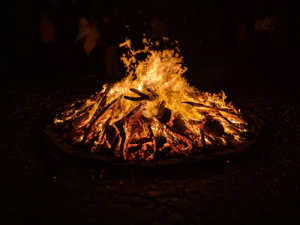
We had a fire early this morning to burn wood on plot 53. Tony Spellman got the fire started & it took me back to March 18th 1996 The Prodigy song (fire starter) so I used this as the theme name for my blog. Here are the best of the pictures I took. Big thanks to Tony Spellman for his efforts this morning. As its bonfire night in a few days, it gave us chance to burn some rubbish & have a tidy up.


Blog & Photographs by Mark Burton (Allotment Secretary)
Winter Tidy Up
Myself & Shaun Russell (Who used to work the plot occupied by South Leeds Live At Home Scheme) came to give me a hand picking litter up on the main paths today. We filled up 3 x black bags of rubbish on our litter picking clean up exercise for the site.


Big Thanks to Shaun for giving up his time to help.
If you see any litter please can you pick it up & lets keep our site tidy.
Blog & Photographs by Mark Burton (Allotment Secretary)
Happy Halloween to all our plot members.


From The Site Committee Officials
Just a reminder to plot members that there will be NO communal bonfire this year.
Any rubbish that needs to be burnt by individual members, must take place on there own plot ,and with safety precautions in place. Fires lit around the 4th to sixth of November are permitted on our site, Just obviously think about wind direction when cars are travelling on OLD LANE. Be Safe


OLD LANE ALLOTMENTS COMMITTEE
My First Broccoli
Lucy sent in these pictures of her first ever broccoli plant she has grown on her new plot. She is really pleased & agreed to share these pictures for the website. Well done to Lucy & Richard.


Blog created by Mark Burton (Allotment Secretary) – Pictures sent in by Lucy & Richard
Seed potatoes


Dear plot holders
It’s that time of year when we need to order our seed potatoes from our certified supplier. All members received an order form with their rent statements. The cut of date for giving me your order form will be Monday 21st October 2019. I will be on site from Wednesday 16th October – Monday 21st October mornings only, if you want to see me on site. Seed potatoes are then delivered in February 2020 ready for chitting then planting. We are always advised by our supplier to place are order as soon as we can to make sure they have the stock’s available.
Blog by Mark Burton (Allotment Secretary) For & on behalf of Old Lane Allotment Association

Dear plot members
A big thank you to those plot members who have engaged in our Kings Seeds allotment Scheme. We do get a percentage from Kings on seed sales that goes back into our allotment funds, which helps go towards the running of the site. Members that have not yet given me their Kings seeds order form & payment need to do so before the 21st October 2019 which will be the cut off date for ordering. I Will be on site from this Wednesday 15th October – 21st October mornings only if anyone has any orders/payments to hand in.
Blog by Mark Burton (Allotment Secretary)
For on & behalf of (Old Lane Allotments Association)
friendly, locally-managed allotments in Beeston, Leeds
A place to return to education, and meet your personal and professional goals in a supportive learning environment. Choose from short courses to PhDs at https://warwick.ac.uk/study/cll/
Welcome to my world: digging, harvesting and other stuff
