Dear Members
The stores will be closed 21st -27th August as i wont be on site. If you need any thing from stores could you please purchase it this week.
Blog created by Mark Burton (allotment Secretary)

Dear Members
The stores will be closed 21st -27th August as i wont be on site. If you need any thing from stores could you please purchase it this week.
Blog created by Mark Burton (allotment Secretary)
During the growing season plants absorb important nutrients & minerals from the soil, these need to be replaced if your plot is to maintain a high level of productivity. Most general purpose fertilisers have an N:P:K rating which relates to the three main elements needed for healthy plant growth. The higher the rating the more of that element exists within the fertiliser.
Nitrogen ( N )
Supports the growth of vegetable parts of plants, leaves & stems. Leafy vegetable’s such as spinach, cabbage, lettuce, have a high nitrogen requirement. Lack of nitrogen causes poor, stunted growth with spindly stems with yellow & discoloured leaves. Nitrogen washes out of the soil so feeds need to be applied over the growing season.
Phosphorus ( P )
Stimulates seed germination & root development, increases stem strength & improves flower formation. Root vegetable’s need plenty of phosphorus to aid development. Lack of phosphorus causes poor, stunted growth, plants produce little or no flowers with a weak root system.
Potassium ( K )
Essential for flower & fruit development, also improves drought pest & disease resistance. Often referred to a “quality element” because of the importance to many of the features associated with quality, such as shape, size colour, & taste. Potatoes, fruit, & tomatoes need a high yield of potassium to crop well. Plants low in potassium are stunted in growth & provide lower yields. Excessive levels of potassium can lead to magnesium & calcium deficiencies. Minerals & also trace elements are important for good plant health, over time with each & every harvest, the soil is depleted of these vital ingredients & they also need replacing.
Blog & Research By Mark Burton (Allotment Secretary)

The leek is a cousin of the onion originally from central Asia, it has been consumed since ancient times. It was on the menu of Egyptians & later the Romans they used it plentifully in their cuisine, especially during there great feasts. It appears on the national emblem of Wales & is that countries national vegetable. Both a vegetable & condiment the leek has always enhanced a wide variety of dishes with its unique aroma.
A most valuable vegetable capable of cropping for six or seven months of the year. Leeks have an important concentrate of the B vitamin folate, natural occurring folic acid, plus vitamins A,K. They are also a concentrated source of antioxidants. Leeks do best in an open position on rich, well worked soil into which plenty of well- rotted organic matter has been added. They have a high nitrogen requirement.
Always read the seed packet for growing instructions
Blog & Research by Mark Burton (Allotment secretary)

South Leeds Conservative Club, Wooler Street, Beeston, Leeds , LS11 7JH
From 7 PM : BUFFET INCLUDED
Blog created by Mark Burton (Allotment Secretary)

If the rest of Geoff’s carrots are like this one he will have a bumper crop.
Photo and blog by Mark Burton (Allotment Secretary)
Allotments have many benefits, they bring people together & unite everyone through shared love of low cost, healthy fresh fruit & vegetable’s, physical exercise & social interaction. National allotments week started in 2002 to raise awareness of allotments & the pivotal role in helping people to live healthier lifestyles
Blog & research Mark Burton (Allotment Secretary)
August with a bit of luck, brings us the best of the summer weather but being the traditional holiday month, it can be hard keeping on top of your allotment with a fortnights holiday. Early potatoes should be dug up now, its best to harvest potatoes early in the day rinse them & leave them to dry, in the sunlight for a day to harden the skins before storage.
Vegetables you can still sow in August
Spring cabbage, Spring onions, radish, beetroot, turnips, Spinach, Swiss chard, carrots, Kale for Winter & Spring cropping, parsley, coriander & chervil can be sown in the greenhouse for growing throughout winter. Plant out summer Cauliflowers early this month for an Autumn harvest
Stop tomato plants growing now to encourage fruit to swell, keep side shoots in check, you want tomato’s & don’t want a mass of green foliage. Keep an eye on your brassicas for butterfly eggs & caterpillars. Most of these will be under the leaves in clusters of little yellow/white balls. Pick or wash them off before they develop & dine on your dinner. Turn your compost the warm weather will help break it down, water it if it’s really dry.
Blog by Mark Burton (Allotment Secretary)
Divide your allotment into equal sections of equal size (depending on how much of each crop you want to grow), plus an extra section for perennial crops such as rhubarb & asparagus. Brassicas : sprouts, cauliflower, cabbage, kale, kohl-rabbi , oriental greens, turnips, swede & radish. Legumes : Peas, broad beans, French & runner beans suffer from fewer soil problems & can be grown wherever. Onions : onions, garlic, shallot, leek. Potato Family : potato, tomato, (pepper & aubergine suffer from fewer problems & can be grown anywhere in the rotation). Roots : beetroot, carrot, celeriac, fennel, parsley, parsnip. (& all other root crops except for turnip & swede which are brassicas). Move each section of the plot a step forward each year so that for example : brassicas follow legumes, onions & roots, legumes, onions & roots follow potatoes & potatoes follow brassicas. Below is a typical three rotation where potatoes & brassicas are important crops.
Year one section one : Potatoes section two : Legumes, onions & roots, section three : brassicas.
Year two section one : Legumes, onions & roots, section two : brassicas, section three : potatoes
Year three section one : brassicas. section two potatoes, section three : Legumes, onions & roots.
Blog & research By Mark Burton ( Allotment Secretary)
Crop rotation is to grow specific groups of vegetable’s on a different part of your allotment garden each year. This helps to reduce a build up of pests & diseases & it organises groups of crops according to their cultivation needs.
Benefits of crop rotation
Soil fertility : different crops have different nutrient requirements. Changing crops annualy reduces the chance of a particular soil deficiencies developing as the balance of nutrients removed from the soil evens itself out over time. Weed control – Some crops like potatoes & squashes with dense foliage or large leaves, suppress weeds, thus reducing maintenance & weed problems in following crops. Pest & disease control : Soil pests & diseases will attack specific plant families over & over again. By rotating crops between sites the pests will decline in the period when their host plants are absent which helps reduce build of spores, eggs, & pests. Common diseases like club root in brassicas & onion white rot can be avoided.
To be continued – crop rotation part 2 to follow
Blog & research By Mark Burton ( Allotment Secretary)
Our love affair with tomatoes has never been stronger, it is only recently that their health – enhancing properties are being noticed. Tomato plants come in either determinate (bush) or indeterminate (vine) types. The botanical name for the tomato is Lycopersicon which translates from the Greeks as ‘wolf peach’. It comes originally from western South America, but it was first cultivated in Mexico & other parts of central America. The tomato reached Britain in the 1590s but we are not quite sure how it arrived or who brought it to our shores.
Tomatoes contain lycopene one of the most powerful antioxidants, they have good sources of vitamin A, & C, fresh tomatoes are rich in potassium Indoors- when first flowers appear transfer to pots, growing bags or greenhouse border. Outdoors – accustom them to outside conditions 2-3 weeks before planting, when last frost has passed. For indeterminate types which need supporting & side shooting whether grown in a greenhouse or outdoors. For determinate types which grow as bushes & do not need supporting or side shooting grow outdoors.
Always read sowing instructions on the seed packet
Blog & Research by Mark Burton (Allotment Secretary)
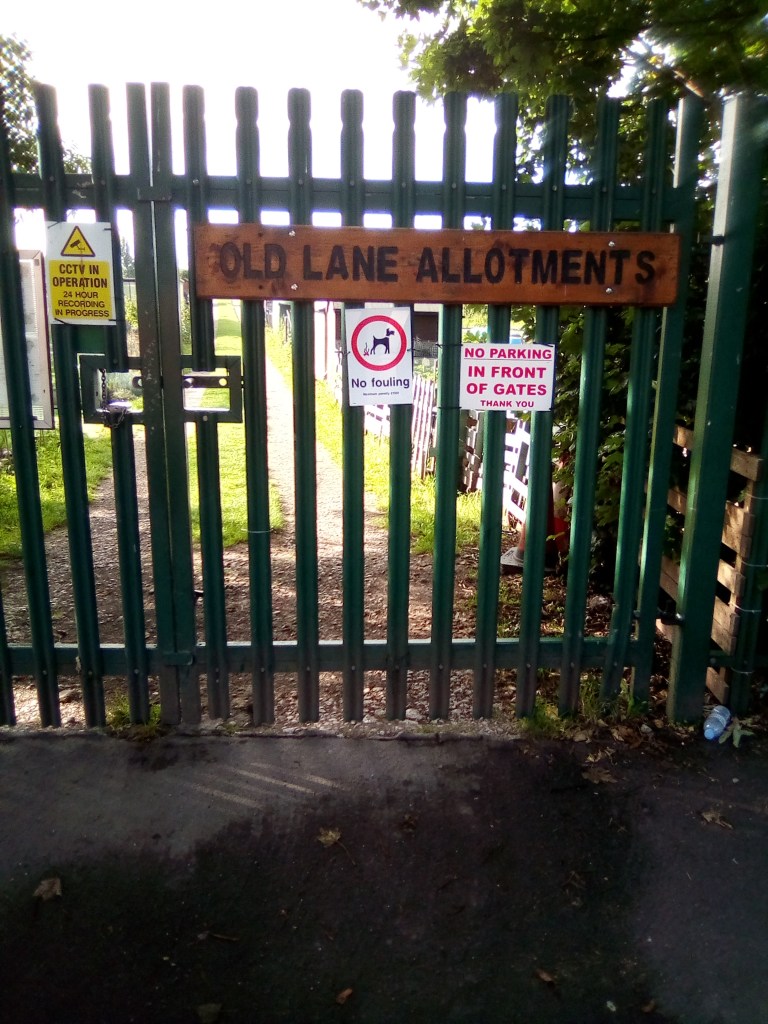
friendly, locally-managed allotments in Beeston, Leeds
A place to return to education, and meet your personal and professional goals in a supportive learning environment. Choose from short courses to PhDs at https://warwick.ac.uk/study/cll/
Welcome to my world: digging, harvesting and other stuff